Skip to content
CrediSegur — home page
All toolsFree simulation · 2 minutes · no personal data

Power and Electricity Tariff: Are You Paying Too Much?

You pay for the power every day, whether you use it or not. See what power your home needs and if the two-rate tariff is worth it for how you use electricity.
  • Reference prices of the regulated tariff
  • With the new off-peak hours of 2027
  • No costs or commitment
What do you want to know?

Two questions and you'll know if you're paying too much for power

Have the latest bill at hand. No one sees what you write.

It's on the bill, in kVA. The most common is 6.9 kVA.
What do you usually have on at the same time?Choose only what is actually on at the same time. The fridge and lights are already counted.
We use typical appliance powers and the regulated tariff prices as a reference. Reference prices of the regulated tariff (ERSE, in effect since 10/1/26), with VAT. They are not your supplier's prices, but the comparison between power levels is similar.

How We Calculate

Two decisions that don't depend on the supplier: the power and the type of tariff.
  1. The Power

    We add up what you connect at the same time and choose the level of that is sufficient. Each level less reduces the fixed part of the bill.Charged per Day
  2. The Tariff

    On the single rate, the price is always the same. On the , it is cheaper in and dearer the rest of the day.Depends on When You Use
  3. Prices

    We use the regulated tariff prices, which are public and the same for everyone. With your supplier, the values are different, but the logic is the same.Reference, not a proposal
To know how much you pay less with another supplier, you need to compare tariffs with your bill. This is done in the energy comparator.

Illustrative cases

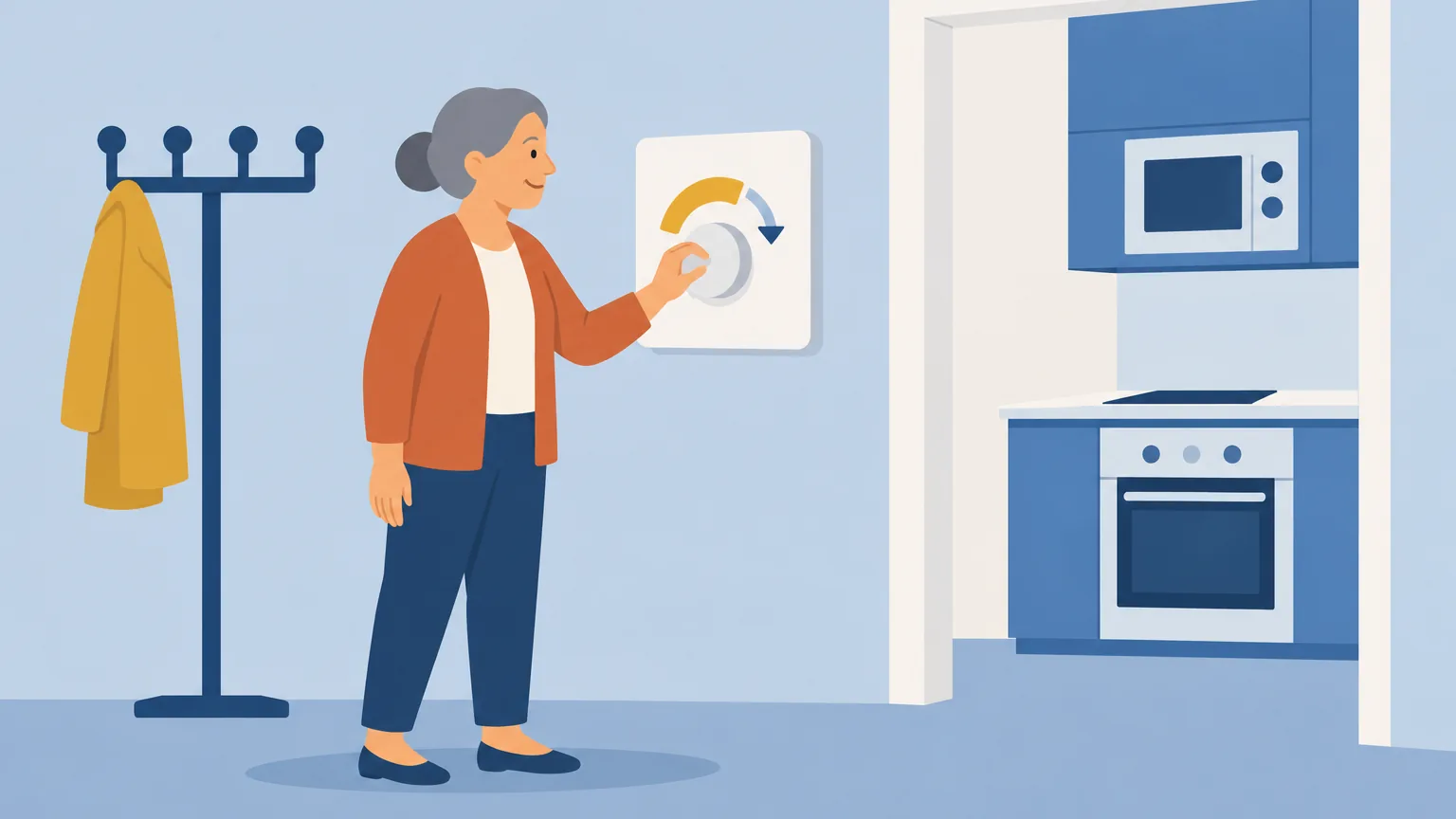
Illustration of Emília next to the home's electrical panel
Illustrative example

Emília was paying for the power of a full house. She lives alone.

She lives in Loulé, in an apartment where four people used to live. The contracted power never changed: 6.9 kVA. She never noticed that line on the bill. She pays it every day, even when she's away.Loulé · Had: 6.9 kVA · Pays for power: €164 per year · Connects at the same time, at most: Oven and Microwave
  1. 1The doubt: “Do I really need all this power?”
  2. 2What the simulator showed: at the time of greatest use, she has about 4.1 kW connected. 4.6 kVA is enough, and she was paying for 6.9 kVA. The difference is €52 per year, just in the fixed part of the bill.
  3. 3The result: she asked the supplier to lower the power. Then, she used CrediSegur's comparator to see if there was a cheaper tariff.

Power that reaches her 4.6 kVA

Savings per year€52

Savings per year
€52
by switching from 6.9 kVA to 4.6 kVA
Power that reaches her
4.6 kVA
instead of what she had
What she connects at the same time
4.1 kW
at peak usage time
“I called the supplier and they changed it the same day. I didn't have to do anything else.” — Emília
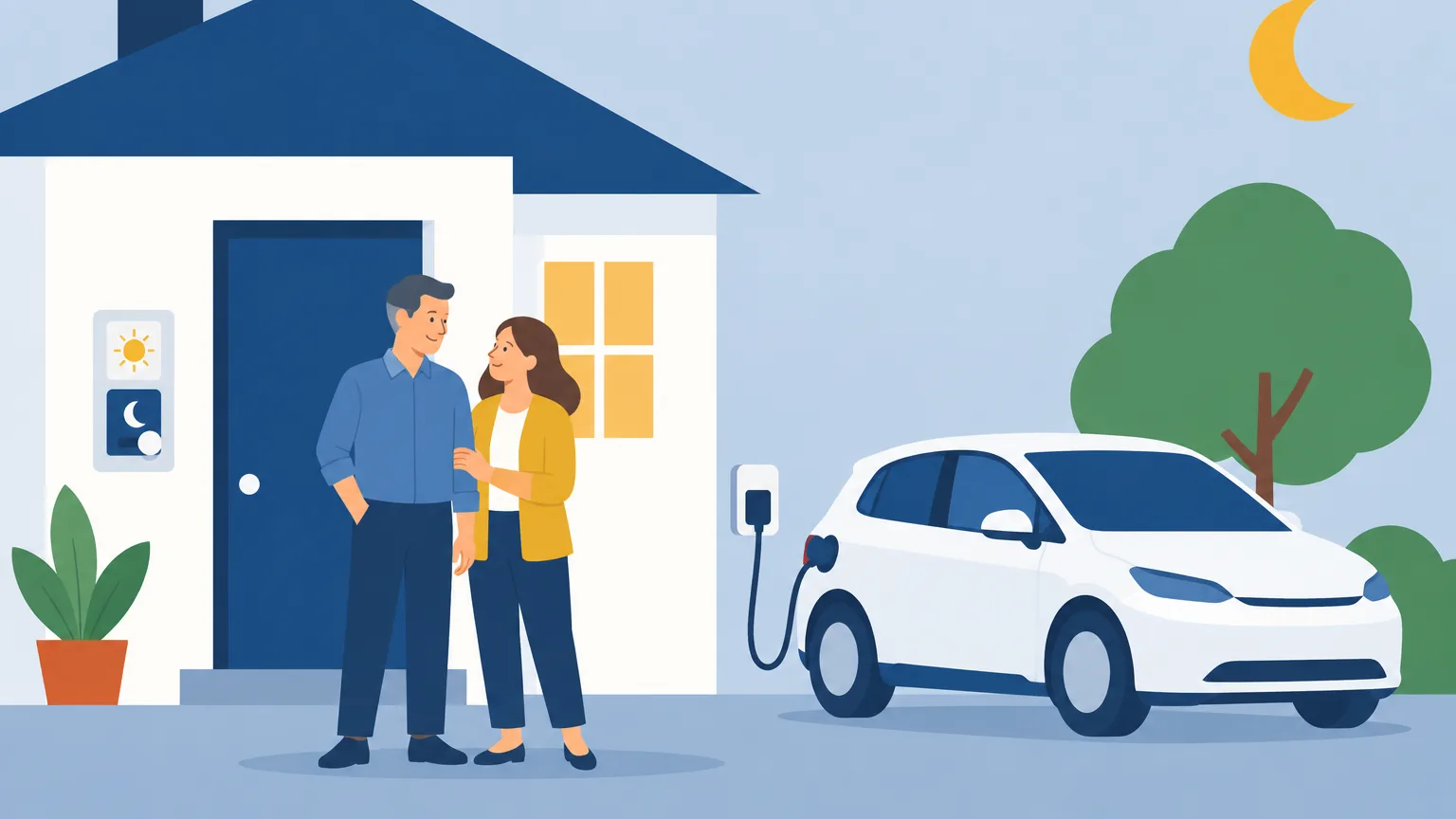
Illustration of Baltazar and Irene at home, at night, with the electric car charging
Illustrative example

Baltazar and Irene bought an electric car and stayed on the single-rate tariff.

They live in Figueira da Foz. With the car charging at home, they started consuming 480 kWh per month, almost all at night. They had heard about the two-rate tariff but didn't know if it was worth it.Figueira da Foz · 480 kWh per month · 65% off-peak · Electric car
  1. 1The question: “With the car charging at night, is the two-rate tariff worth it?”
  2. 2What the simulator showed: on the single rate, they paid €1,142 a year for energy. On the two-rate tariff, with 65% of their use off-peak, they paid €974. The two-rate tariff pays off from 37% off-peak, and they are well above that.
  3. 3The result: they requested the two-rate tariff from the supplier and programmed the car to charge during off-peak hours, from 10 pm to 8 am, every day.

Consumption during off-peak hours 65%

Annual savings€168

Annual savings
€168
with the two-rate tariff, only on energy
Consumption during off-peak hours
65%
with the car at night
The two-rate tariff pays off from
37%
of consumption off-peak
“The car was already charging at night. The tariff just needed to catch up.” — Irene
*Illustrative, non-binding example, with a fictional family and values that are merely indicative and subject to technical confirmation. It does not include any credit or financing conditions: the savings shown are energy and operating savings, calculated with the assumptions indicated, and vary according to each client’s consumption, region, roof and vehicle. Indicative simulation, without commitment. Illustrative case: characters and values are fictional and serve only to demonstrate the simulator's operation. Reference prices of the regulated tariff (ERSE, in effect since 10/1/26), with VAT; they are not proposals from any supplier.

What's True and What's a Myth on the Electricity Bill

Four ideas we hear often, and what to do about each.
  • Myth“More power is always better.”False. Power only serves to connect more things at the same time. If you never trip the circuit breaker, you might be paying for too much power every day.What to do: See what you connect at the same time and compare it with the power on the bill.
  • Depends“The two-rate tariff is cheaper.”Depends. It only pays off if a good part of the consumption is during off-peak hours. With reference prices, more than 37% is needed.What to do: Do the math with your habits before changing.
  • Truth“I can change power and tariff without changing supplier.”True. You request it from the supplier and, with a smart meter, the change is made remotely. Generally, there are no costs.What to do: Call your supplier with the bill in hand.
  • Myth“The two-rate tariff ends in 2027.”False. Off-peak hours change by half an hour: in the daily cycle, they become from 10.30 pm to 8.30 am, every day. The tariff continues to exist.What to do: If you program machines for the start of off-peak hours, adjust them to the new schedule.

Frequently Asked Questions

It is the maximum electricity the house can use at the same time. It is measured in kVA and is on the bill. You pay a fixed amount per day for it, whether you use a lot or a little.
Add up the power of the appliances you use at the same time. The oven, stove, machines, and heaters are the heaviest. If the circuit breaker never trips, you probably have excess power.
The circuit breaker trips when you turn on too many things at once. It doesn't damage anything: you turn off an appliance and reset the breaker. If it happens often, ask to increase a level.
They are the regulated tariff prices published by ERSE, in effect since October 1, 2026. They are a reference equal for everyone. Each supplier has its own prices, so the amount on your bill is different.
These are the hours when electricity is cheaper in the two-rate tariff. Today, in the daily cycle, they are from 10 pm to 8 am, every day. In the weekly cycle, they are weekdays from midnight to 7 am, part of Saturday and all of Sunday.
Off-peak hours will start and end half an hour later: from 10.30 pm to 8.30 am, every day, in the daily cycle. For families, the change happens between 1 July and 31 December 2027, and is done by the network operator.
Official data verified on 10/20/2026 · Sources: Autoridade Tributária, ERSE · see sources
Important Note: Informative simulation for domestic customers in mainland Portugal. The prices are those of the regulated tariff published by ERSE, used as a reference; they are not proposals or conditions of any supplier. Values include VAT and exclude fees. Appliance power values are typical. Only the single and two-rate tariffs on the daily cycle: the three-rate tariff and the weekly cycle are left out. Solar panels and other installations only with accredited external partners, identified as such. Sources (in Portuguese): ERSE, tarifas transitórias de venda a clientes finais em baixa tensão normal, 4.º trimestre de 2026 (mercado regulado); valores sem IVA, in effect since October 1, 2026; Potências típicas (pressupostos CrediSegur); a potência certa está na etiqueta de cada aparelho. CRRF – BROKERAGE, LDA (CrediSegur) is a tied credit intermediary registered with Banco de Portugal (no. 0001290) and an insurance agent registered with ASF (no. 421571530); does not charge fees for credit intermediation.