Skip to content
CrediSegur — home page
All toolsFree simulation · 2 minutes · no personal data

Is importing a car worth it?

See how much it costs to bring a car from Europe, including ISV, VAT, transportation, and legalization, for electric, hybrid, petrol, and diesel vehicles. And find out if it's worth buying it in your name or through the company.
  • Credit intermediary and insurance agent registered with BdP and ASF
  • Editable ISV tables for 2026 and transportation and legalization costs
  • Intermediation service at no cost to you
What do you want to know?

Three questions to find out how much it costs to bring the car

The data is in the ad and the certificate of conformity.
What is the car's fuel type?
€

The ad price, excluding transport.

It's in the ad or the car's document from the country of origin.
Origin: Germany. We assume the usual engine size and emissions and the reference costs of bringing the car over. Fine-tune it all in «In detail».

How we calculate

We add up the tax and the costs of bringing the car to Portugal, so you can see whether it pays off compared with buying here.
  1. ISV

    Engine-size component plus environmental component (CO₂), plus the particulate surcharge on diesel cars. Hybrids and plug-ins have reduced rates if they meet the requirements.Legal rule · CISV, art.º 7.º e 8.º
  2. Age reduction

    On used cars from another EU country, the tax goes down with the car’s age. A car that is “new” for tax purposes also pays VAT in Portugal.Legal rule · CISV, art.º 11.º; CIVA
  3. The other costs

    Transport, inspection, customs declaration, registration and timelines. They are market averages and you can change them.Assumption

Illustrative cases

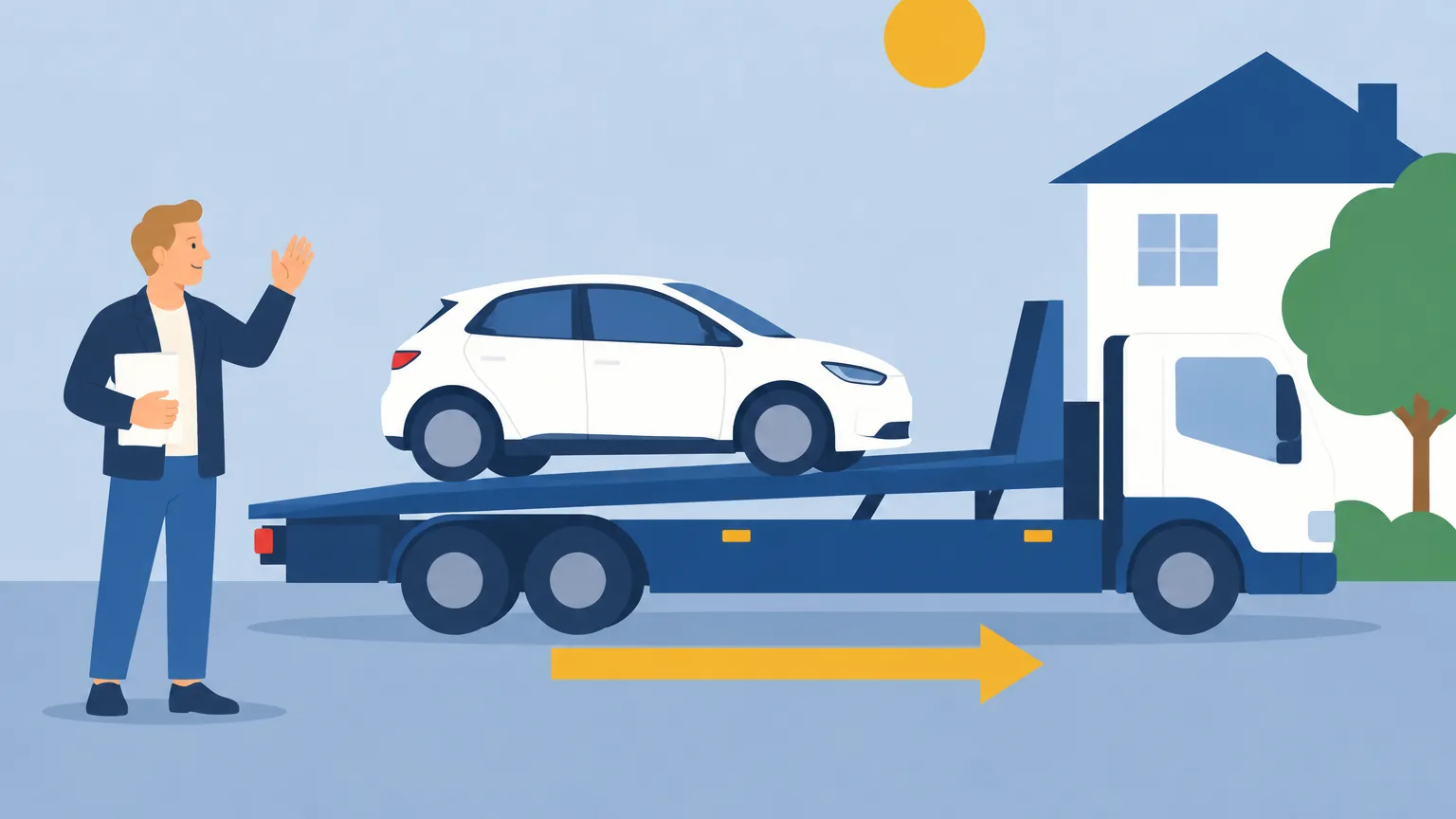
Illustration: a transport truck with an electric car arriving in Portugal, and Hélder waiting
Illustrative example

Hélder brought an electric car from Germany and saved without paying ISV.

He found an electric car from 2023, with about 53,000 km, for €26,500 in Germany. In Portugal, a similar one cost €31,900. With transport and legalization, the car is €28,150 delivered to the door.
  1. 1“With the transport and paperwork, is it still worth it?”
  2. 2Zero ISV and zero VAT, because it is used, and €1,650 for transport, customs agent, inspection, registration, and temporary insurance. Delivered in Paços de Ferreira, it costs €28,150.
  3. 3He requested personal credit from CrediSegur to pay for the car and transport all at once.

ISV €0

Savings compared to Portugal€3,750

Savings compared to Portugal
€3,750
12% below the price in Portugal
ISV
€0
100% electric
Costs of bringing
€1,650
Transport and paperwork
“The ISV was zero. What I needed to know was the rest.” — Hélder
Illustration: a diesel SUV with a red tax label
Illustrative case · counterexample

Lúcia was going to bring a diesel SUV. It wasn't worth it.

ISV (vehicle tax) €2,307

More than in Portugal€1,057

She lives in Vila do Conde and found a diesel SUV from 2019 in Germany, with 1,968 cm³ and 140 g/km, for €21,000. Even with a 65% discount for age, the ISV is €2,307. With transport and legalization, it costs €24,957, €1,057 above a similar one in Portugal (€23,900). She bought it here.
Illustration: Bernardo's carpentry with an electric car charging at the door
Illustrative example

Bernardo registered the new car in the carpentry's name.

He has a carpentry in Santo Tirso and needed a car to visit clients. He was looking at a new electric car for €45,000 without VAT, at a German dealership. For the company, over 4 years, the car costs €21,963 less than in his own name.
  1. 1“Should I register the car in my name or the company's? And electric or diesel?”
  2. 2For the company, he recovers €10,350 of VAT, doesn't pay autonomous taxation, and saves €2,903 of IRC per year. A diesel car at the same price would pay 32% of autonomous taxation and would be €16,374 more expensive for the company than in his own name.
  3. 3He bought the electric car in the carpentry's name and confirmed everything with the certified accountant.

VAT recovered €10,350

Difference in 4 years€21,963

Difference in 4 years
€21,963
Company €45,037 · in own name €67,000
VAT recovered
€10,350
On purchase
Autonomous taxation
€0
Per year, electric within the limit
“At the same price, the diesel for the company would be more expensive than in my name.” — Bernardo
*Illustrative, non-binding example, with values that are merely indicative and subject to confirmation. This does not constitute a credit offer and does not replace an assessment of each client’s personal and financial situation, nor the approval of the lending credit institution. CrediSegur (CRRF Brokerage, Lda.) — Tied Credit Intermediary registered with Banco de Portugal under no. 0001290. Illustrative cases: characters, values, and conditions are fictitious and serve only to demonstrate the simulator's operation, with the ISV tables of 2026 and reference costs of bringing. The company's tax rules depend on each situation: always confirm with your certified accountant. It is not tax advice.

What's True and What's Myth in Importing

Four ideas we often hear, and what to do about each.
  • Depends“An imported electric car pays nothing.”It doesn't pay ISV or IUC. But it pays VAT of 23% if considered new, and there are always transport and legalization costs.What to do: See the costs of bringing in 'Refine Assumptions' and request quotes.
  • Myth“With few kilometers done abroad, the car is already used.”False. With 6,000 km or less, or up to 6 months, it's considered new and pays VAT of 23% in Portugal.What to do: Confirm the kilometers and the date of the first registration before paying.
  • Myth“Through the company, I always recover the VAT.”False. Only on electrics up to €62,500 and plug-ins up to €50,000, and only with an invoice with VAT. In the margin scheme, VAT is not recoverable.What to do: Ask the seller for an intra-community invoice with the company's VAT number.
  • Myth“The State incentive applies to an imported electric car.”False. The 2026 Environmental Fund support was only for new electrics, with the scrapping of an old car, and applications closed in February.What to do: Do the math without the incentive. If it compensates this way, it certainly compensates.

Frequently Asked Questions

A portion is added for the engine size and another for CO2 emissions, with different tables for petrol and diesel and for the NEDC and WLTP tests. For used cars from the European Union, the total decreases with age: 10% up to 1 year and up to 80% with more than 10 years. Diesel cars with particulates above 0.001 g/km pay an additional €500.
Plug-ins pay 25% of the ISV if they have at least 50 km of electric range and less than 50 g/km of CO2 (up to 80 g/km with Euro 6e-bis approval). Regular hybrids only pay 60% if they meet the same conditions, which is rare. 100% electric vehicles are exempt.
When the car is considered new: up to 6 months from the first registration or up to 6,000 km. It then pays 23% VAT here. For used cars bought from a private individual or a dealership under the margin scheme, you don't pay VAT here.
The customs declaration must be made within 20 business days after the car enters Portugal, and the ISV must be paid within 10 business days thereafter. The ownership registration must be done within 60 days after registration.
Because, until the car has a Portuguese registration, it cannot be used as collateral for an auto loan in Portugal. Personal credit covers the car, transportation, and taxes all at once.
For electric vehicles up to €62,500, the company recovers the VAT from the purchase, does not pay autonomous taxation, and the cost is considered an expense. For plug-ins up to €50,000, it recovers the VAT and pays reduced rates (3% to 8% and higher). For combustion cars, it does not recover the VAT, pays up to 32% in autonomous taxation, and only €25,000 are considered an expense. Always confirm with your certified accountant.
Official data verified on 10/20/2026 · Sources: Diário da República, Autoridade Tributária, Segurança Social, Assembleia da República · see sources
Important Note: Informative simulation, with the ISV Code tables in force in 2026 (CISV, art.º 7.º, 8.º e 11.º (Lei n.º 82/2023; Lei n.º 73-A/2025 para os plug-in)) and the company's tax rules (CIRC art.º 88.º, CIVA art.º 21.º e Portaria n.º 467/2010 (valores de 2026)). Transportation and legalization costs are market reference values (10/7/26) and may vary. The exact ISV value is what the Tax Authority settles: confirm in the Portal das Finanças simulator before paying. It does not constitute tax or financial advice. CRRF – BROKERAGE, LDA (CrediSegur) is a tied credit intermediary registered with Banco de Portugal (no. 0001290) and an insurance agent registered with ASF (no. 421571530); it does not charge fees for credit intermediation. Insurance proposals only after analyzing the client's needs.